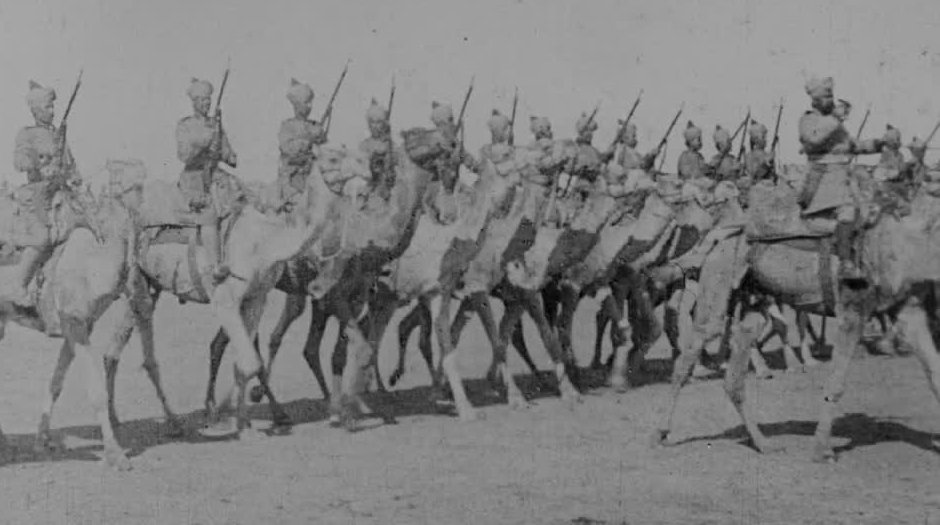
Delhi Durbar
Free 14-day trial, then just £6.99 per month.
Please enter a valid email address
By entering your email address you are indicating that you have read and agree to the terms of use and privacy policy.
Free 14-day trial, then just £6.99 per month.
Get 14 days free
A film produced to celebrate the coronation of George V as King-Emperor at the Imperial Durbar of 1911.
Viceroy Lord Hardinge was instructed after the coronation of George V in June 1911 to organise an Indian equivalent to pageantries in Britain. The chosen model of an ‘Imperial Durbar’ was an old one. Previous shows of Indian obeisance before a representative of the Crown had occurred in 1877 and 1903 after Victoria and Edward VII were declared Empress and Emperor of India. The ceremonies organized by Hardinge at Delhi from 7th to 16th December 1911 operated within this invented tradition.
The Durbar was used to contrast British modernity with Indian tradition. Europeans at the Durbar were instructed to dress in contemporary styles even when celebrating an older British Imperial past (as with the ‘Mutiny’ veterans). Indians, however, were to wear Oriental costumes as motifs of their otherness. The construction of this exaggerated sense of Imperial order at the Durbar was significant. The event was used to declare New Delhi as the new capital of British India. Delhi was chosen as a refuge from the nationalist sentiment that had gripped the old capital of Calcutta. The Durbar was a show of Imperial continuity by an increasingly anxious Empire. Dr. Gajendra Singh (University of Exeter)