This film is not rated
Contains titles in this collection may contain language or other content that reflect views prevalent in their time but that may cause offence today.
Free 14-day trial, then just £6.99 per month.
Please enter a valid email address
By entering your email address you are indicating that you have read and agree to the terms of use and privacy policy.
Free 14-day trial, then just £6.99 per month.
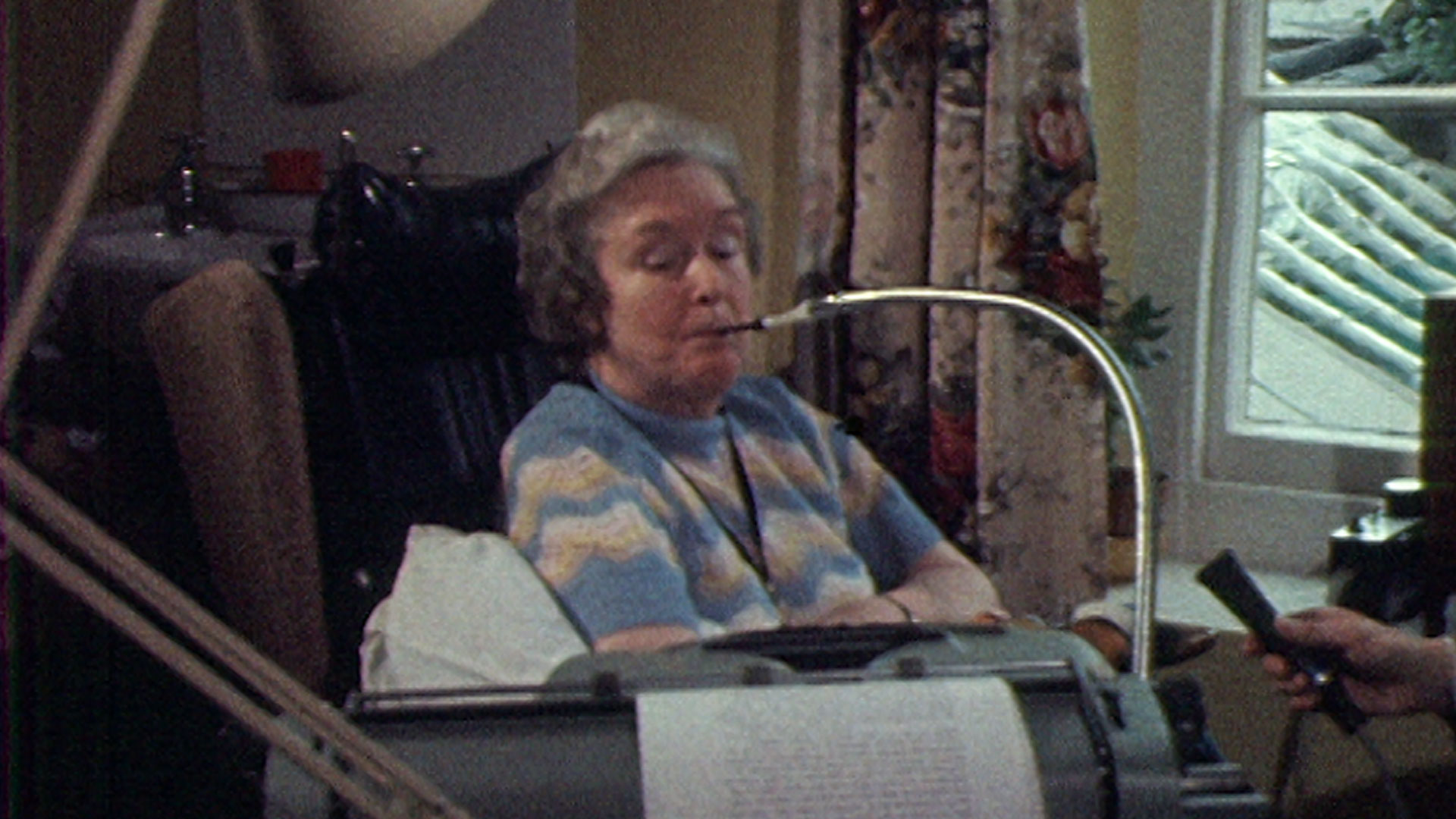
Eileen Brown lives with Multiple Sclerosis and uses assistive technology to write after seven years.
Eileen Brown from Braunton in Devon lives with Multiple Sclerosis and uses assistive technology in the form of sip-and-puff to write short stories and a novel after seven years of not being able to write due to her condition. Sip-and-puff uses air pressure by inhaling by sipping or exhaling by puffing through a special mouthpiece or wand which controls the typewriter and is based on the principle of morse code.
The Patient Operated Selector Mechanism (POSM or POSSUM) was developed in the early 1960s and used a sip-and-puff control mechanism. Morse code was used for typewriter control through voiced or sip-and-puff in the VOTEM system in 1969 and by oral muscular control by 1972. As technologies developed more investment produced augmentative and alternative communication (AAC) devices crucial in the education and communication of disabled people and children. Multiple Sclerosis (MS) is a condition of the central nervous system where the coating of the nerve fibres or myelin is damaged by the body's own immune system.