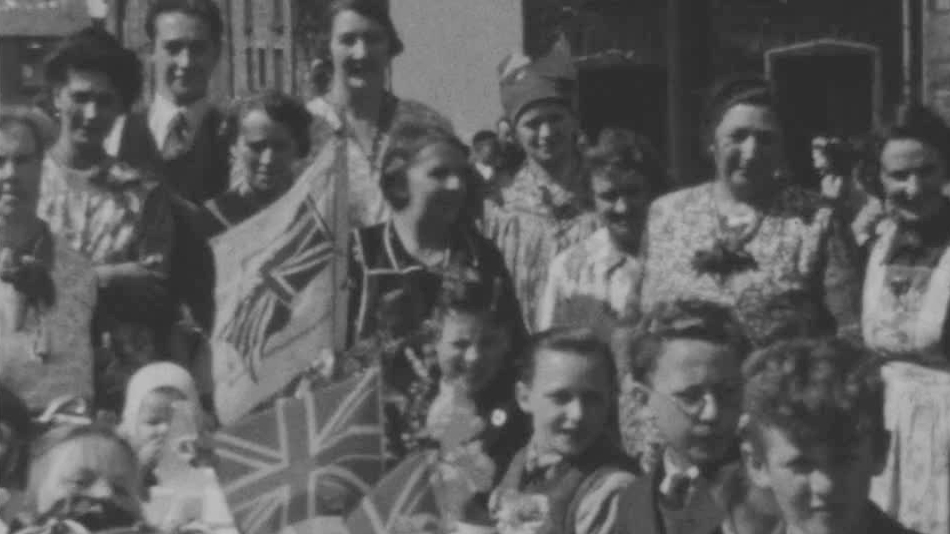
Street teas - Aberaman, after 1939-45 war
Free 14-day trial, then just £6.99 per month.
Please enter a valid email address
By entering your email address you are indicating that you have read and agree to the terms of use and privacy policy.
Free 14-day trial, then just £6.99 per month.
Get 14 days free
The war is over so out come the cake and ale, the smiles and ‘V’ signs, and the effigy of Hitler that, tied to a lamppost, is for burning when night falls.
Arthur [Archie] Bucknall Andrews, pharmacist/optician in Aberaman, a mining village in the Rhondda, records the street teas that took place in his town to celebrate the end of WWII. How much cake was eaten that day at tables set out in the street? How much beer was drunk? How long did Hitler’s effigy burn? And what happened to the twins wearing striped berets whose father was so anxious for them to be recorded on film that he ran into the picture with them in his arms more than once?
Some of the street groups that Mr Andrews film wave and smile and make victory ‘V’ signs, others are quieter and one group can be seen to be singing a song, seriously – a hymn, possibly. Although there was some riotous partying in e.g. London and other cities, on the whole (as evidenced by the diary entries of the volunteers who were part of the government’s Mass Observation project that operated from 1937 until the 1960s), in towns and villages, cakes, street parties and bonfires were the order of the day, arranged mainly with children in mind.