Bank Robbers
Free 14-day trial, then just £6.99 per month.
Please enter a valid email address
By entering your email address you are indicating that you have read and agree to the terms of use and privacy policy.
Free 14-day trial, then just £6.99 per month.
Get 14 days free
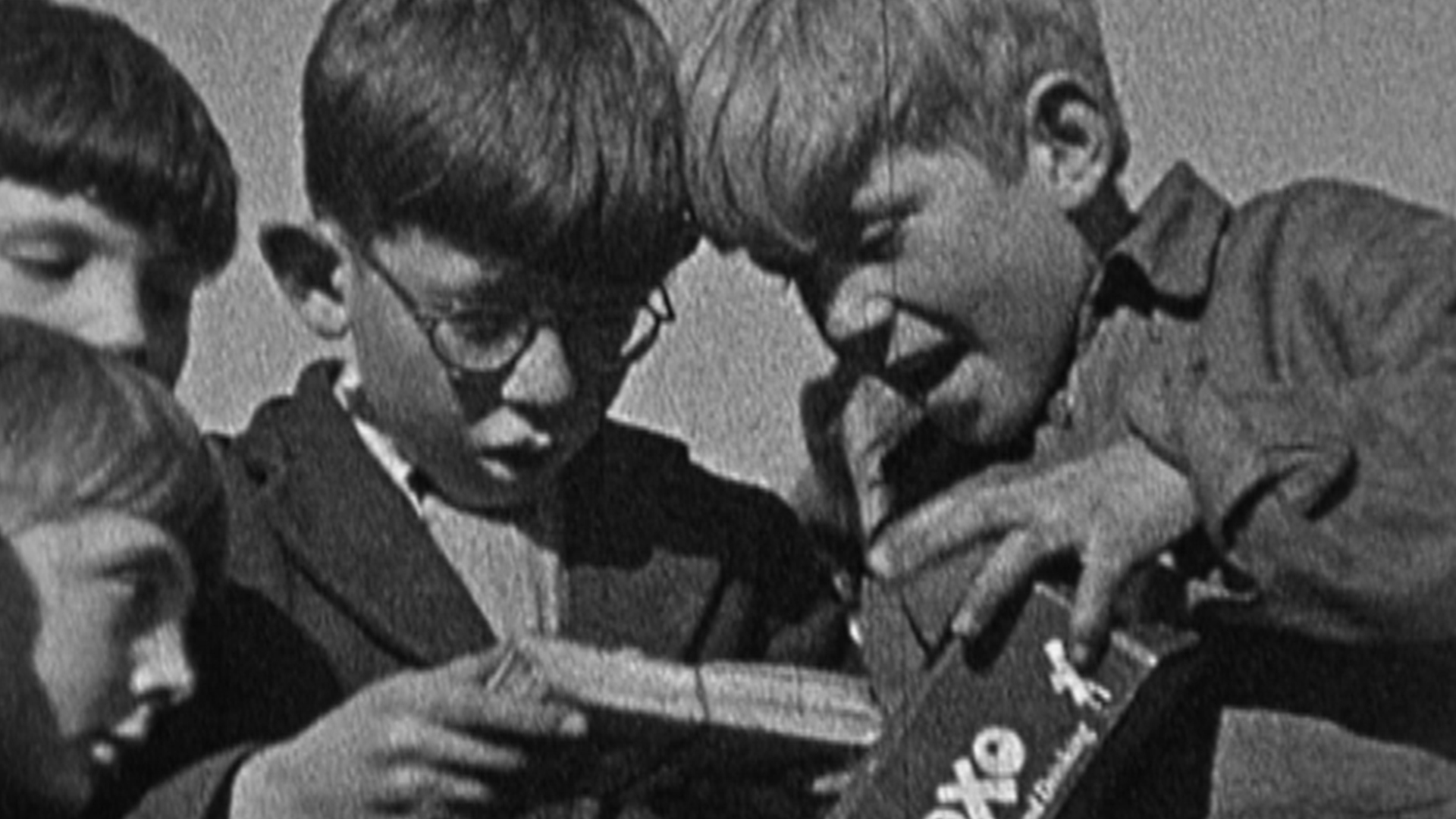
The excitement of making this crime caper is clearly seen in the acting of these kids from a village junior school, as they chase the robbers across fields overlooking the Dales.
A little tale of thieves getting their comeuppance and their captors their just reward, starring young children from a West Yorkshire junior school, giving wonderful performances as they gang up to trap the bank robbers. A moral lesson they probably needed; and a real insight into the imaginary mindset of Dixon of Dock Green Britain. Mention bank robbers now and you’re as likely to think of bankers receiving bizarre bonuses than robbers of the traditional 1950s kind.
For a school to make a film of this kind in the 1950s usually called for a teacher who was into making amateur films, but we don’t know who this might have been at Foxhill School. The 1950s saw an increase in organised crime gangs carrying out highly planned robberies, such as the 1952 Eastcastle Street robbery. There was also increasing youth crime, mostly petty thefts, and the dread of the Teddy Boys. But in the main, it was a time when you could leave doors unlocked, at least for those who never had anything worth stealing (still under a half of households owned a TV). In the mid 1950s there was just half a million reported crimes, a figure that would double in each of the succeeding three decades.