Advance Democracy!
Free 14-day trial, then just £6.99 per month.
Please enter a valid email address
By entering your email address you are indicating that you have read and agree to the terms of use and privacy policy.
Free 14-day trial, then just £6.99 per month.
Get 14 days free
A housewife galvanises her docker husband to take an interest in more important matters than the football pools.
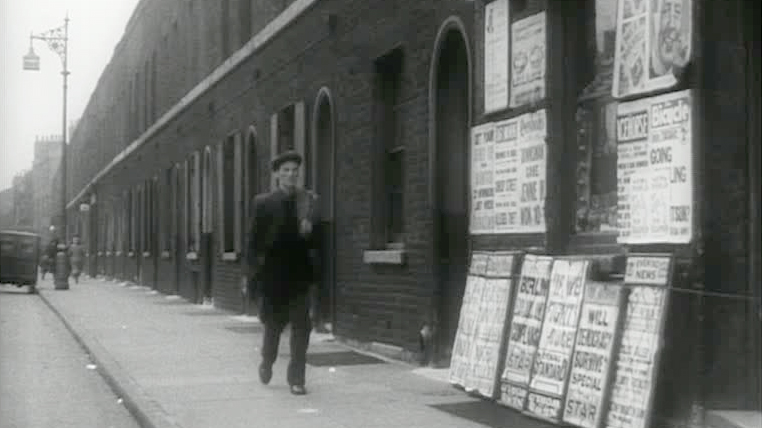
After a hard day’s work in London’s busy docks, Bert is encouraged by his wife May to listen to a wireless programme about the Co-operative Movement. He undergoes a rapid political transformation and exhorts his fellow dockworkers to join the annual May Day Parade. They spend a magnificent day at the parade - and the footage is overlaid with rousing music arranged by Benjamin Britten.
The film’s director, Ralph Bond, co-founded the London Workers’ Film Society and believed in “putting the worker on the screen as a positive and vitally important aspect of life as a whole.” As well as the brilliantly filmed scenes of the men working in the dockyards, we see the struggle of May to put food on the table. This is in vivid contrast with the leisured, wealthy woman at the beginning of the film who telephones to order “Four nice soles, two plump chickens and a dozen meringues.”