Will There Be Women MPs?
Free 14-day trial, then just £6.99 per month.
Please enter a valid email address
By entering your email address you are indicating that you have read and agree to the terms of use and privacy policy.
Free 14-day trial, then just £6.99 per month.
Get 14 days free
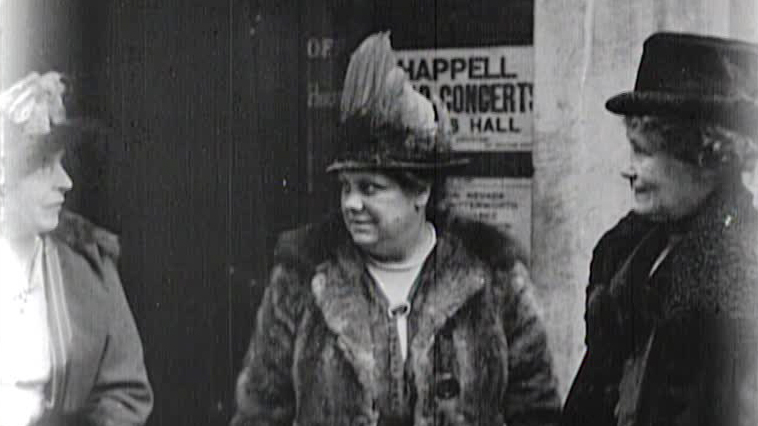
The leading organisation fighting for women's suffrage changes tack, as Christabel and Emmeline Pankhurst launch the Women's Party.
For over a decade the Women's Social and Political Union was the leading voice of women's suffrage, although, as their slogan "Deeds not Words" suggests, their actions spoke louder. By November 1917 the WSPU had morphed into a more nationalistic body supporting the war effort. After posing for the newsreel cameras, as seen here, Emmeline Pankhurst took to the stage of Queen's Hall London to launch the rebranded Women's Party.
The Topical Budget newsreel used the occasion to ask a question about women in parliament, setting aside the matter of votes for women altogether. The following year would see developments on both fronts, with government Acts allowing women over 30 to vote and women over 21 to stand for election (but not to vote themselves!). Nancy Astor became the first female MP just two years after this newsreel was issued. Emmeline Pankhurst used the Women's Party launch to rail against the Russians, take on the trades unions, and set out a policy of "Britain for the British". The Women's Party disbanded in 1919, with Christabel Pankhurst missing election by the narrowest of margins, despite the support of her formidable mother.