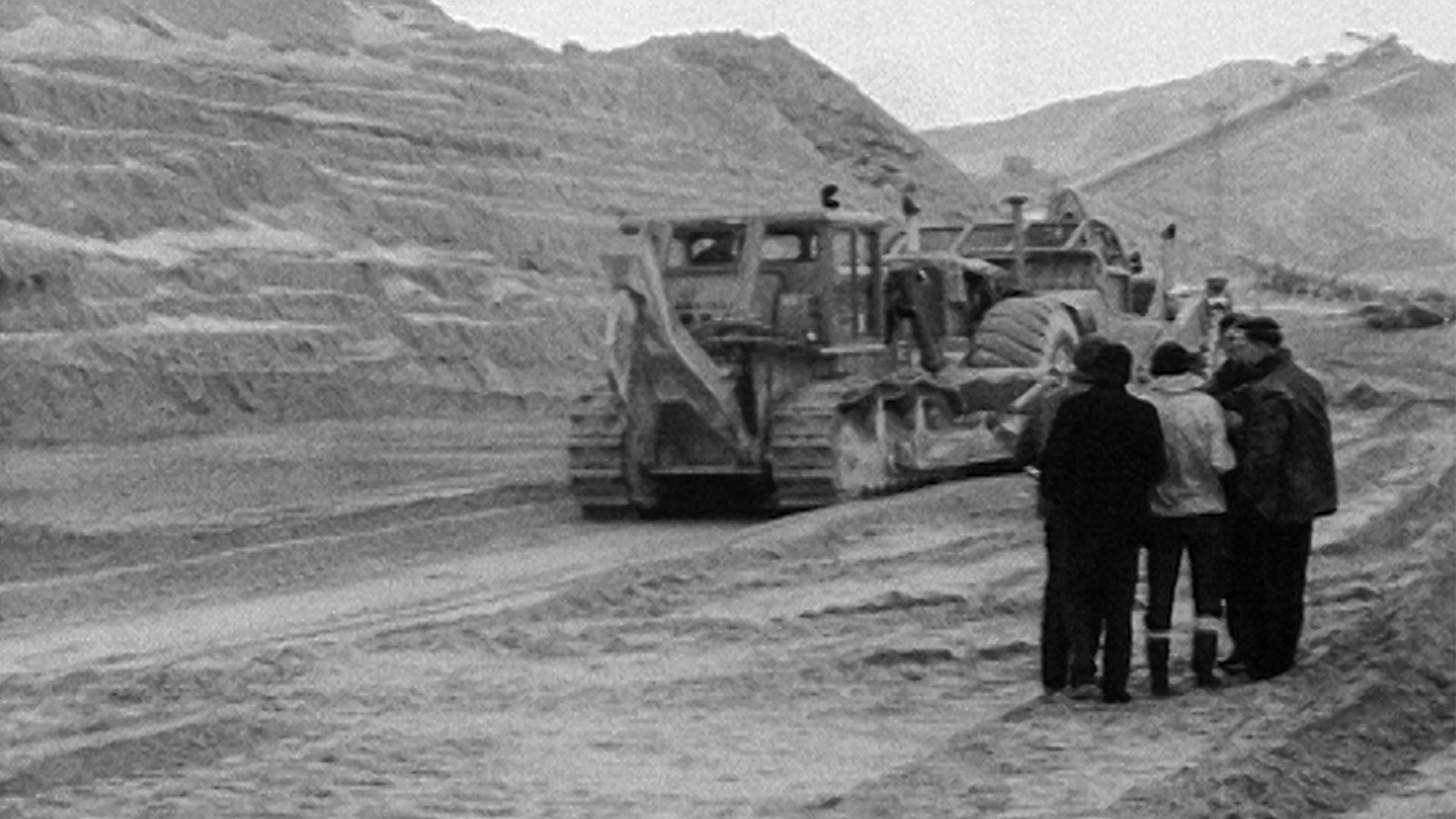
China Clay Heyday
Free 14-day trial, then just £6.99 per month.
Please enter a valid email address
By entering your email address you are indicating that you have read and agree to the terms of use and privacy policy.
Free 14-day trial, then just £6.99 per month.
Get 14 days free
This film gives a powdery insight into the china clay works of Cornwall
China clay was discovered and used by the Chinese in the seventh and eight centuries AD. Britain imported fine china from the Chinese until the 1740s when china clay deposits were found around St Austell in Cornwall. English potteries turned their potter's wheel to making fine bone china like Royal Worcester and Wedgwood after Thomas Fyre of Bow and Josiah Spode of Stoke-on-Trent developed bone china, a fine white porcelain following the discovery of the deposits.
Kaolin is made from the clay mineral kaolinite formed by the decomposition of aluminium silicates such as feldspar. The deposits are blasted in open pits at high pressure to form slurry. The kaolin produced is mixed with other materials but gives the bright white bone china; bone, because Thomas Fyre added bones into the mix, a by-product of the slaughterhouses that surrounded his factory. Fine decorated porcelain began to be exported around the world. Most major English firms made or still make it and china clay is still extracted in Cornwall and Malaysia but most is used to make paper white with only twelve per cent of production going to the pottery industry.